
🏖 Red Sea Adventures

Sharm El Sheikh Travel Guide (2026)

A practical guide to Sharm El Sheikh: when to go, which bay to stay in, the best reefs and desert excursions, day trips to Cairo, and how to plan a week that actually feels restful.

Red Sea Adventures12 min readPublished: 24 August 2026Last updated: 24 August 2026Reviewed by Mohamed Hassan

Quick facts

Location
Southern tip of the Sinai Peninsula, on the Red Sea
Best time to visit
October to April for comfort; June to August for the warmest sea
Recommended duration
5–7 nights is the ideal length of stay
Family friendly
Yes — Nabq Bay in particular is built around family resorts
Weather
Hot desert climate; mild sunny winters, very hot summers

Quick summary

  • Sharm sits where the Sinai desert meets the Red Sea, so reef and desert are both minutes away.
  • October to April is the most comfortable season; June to August is hot but has the warmest sea.
  • Choose your bay carefully: Naama Bay for nightlife, Nabq for families, Shark's Bay for reef access.
  • Ras Mohammed National Park is the standout day trip; Mount Sinai and the Coloured Canyon follow.
  • Cairo and the Pyramids of Giza are reachable in a single day by flight.

Why Sharm El Sheikh is worth the trip

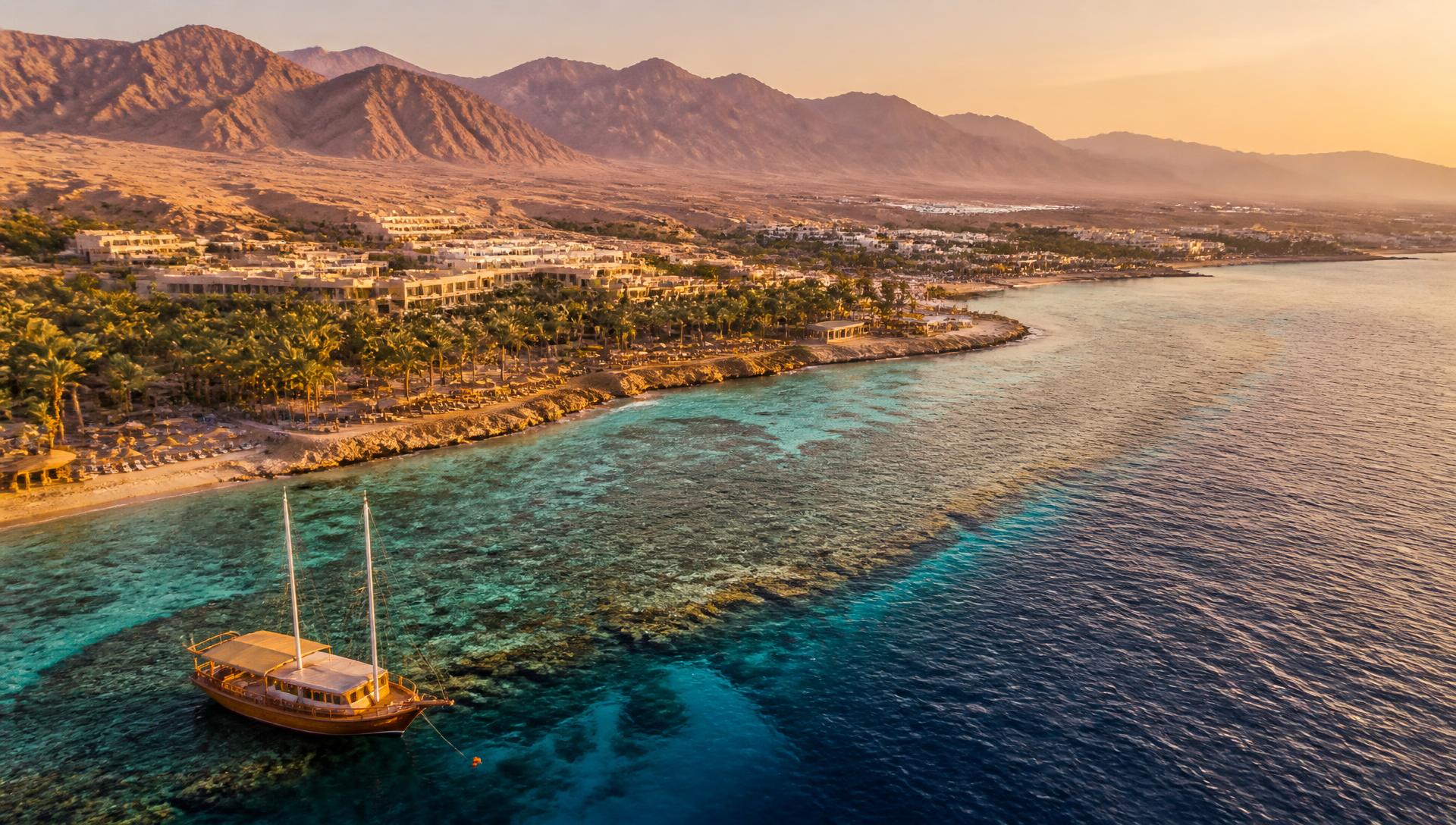
Sharm El Sheikh sits on the southern tip of the Sinai Peninsula, where the desert mountains fall straight into the Red Sea. That geography is the whole reason the town exists as a resort: the reef begins metres from the shoreline, the water stays warm for most of the year, and the mountains behind the bays block much of the wind. For travellers, it means you can be snorkelling over a living coral wall fifteen minutes after breakfast, ride a quad bike across the Sinai desert in the afternoon, and be back at your hotel for dinner. Sharm is also one of the easiest places in Egypt to combine complete relaxation with real sightseeing. Most guests spend their mornings on the water and their evenings in Naama Bay or Soho Square, but the same base puts Ras Mohammed National Park, the Coloured Canyon, Mount Sinai and St Catherine's Monastery within a single day's reach. If your idea of a holiday is a beach with something worth doing beyond it, Sharm delivers more variety per day than almost any other Red Sea resort.

Getting there and getting around

Almost everyone arrives through Sharm El Sheikh International Airport (SSH), which sits just north of the resort areas and handles both charter and scheduled flights. Transfer times to the main hotel zones are short — usually fifteen to thirty minutes. Within Sharm, the resort is spread along the coast rather than gathered in one centre, so you will need transport between areas. Hotel shuttles, taxis and pre-arranged private transfers are the normal options. Agree the fare before you get into a taxi, or use a private transfer where the price is fixed in advance. Domestic flights connect Sharm to Cairo in roughly an hour, which is what makes a same-day pyramids trip possible. Road journeys to Cairo are long — count on six to seven hours each way — so most travellers who want the pyramids choose the flight option. A useful rule: book excursions with pickup included. Distances inside Sinai are larger than they look on a map, and the departure times for desert and Ras Mohammed trips are early.

The best time to visit

Sharm works all year, but the experience changes noticeably by season. **October to April** is the most comfortable window. Days are warm rather than hot, the desert excursions are pleasant, and the sea is still swimmable. This is also when Mount Sinai and St Catherine's are at their best, because the pre-dawn climb happens in cool air. **May and September** are shoulder months: hot but manageable, with excellent water temperatures and slightly quieter beaches. **June to August** brings serious heat, regularly above 38°C. It is still a popular family period because the sea is at its warmest, but plan water activities for the morning and keep desert trips for late afternoon. **Winter evenings** surprise people. From December to February the sun is strong at midday and the temperature drops quickly after sunset, especially on boats and in the mountains, so pack a jacket.

Where to stay: choosing the right bay

Sharm is a collection of bays, and the one you choose shapes your holiday more than the hotel category does. **Naama Bay** is the classic centre: a promenade, restaurants, shops and the busiest evening atmosphere. Best if you want to walk out of your hotel and find life. **Nabq Bay** sits north, close to the airport, with large family resorts, wide beaches and a quieter feel. Some stretches have shallow, seagrass-heavy entries, so check whether your hotel has a jetty if house-reef snorkelling matters to you. **Shark's Bay and Ras Um Sid** are the strongest choices for snorkellers and divers, because the reef drop-off is close to shore and access is generally excellent. **Sharks Bay's northern hotels and Om El Seid cliff area** suit couples looking for calm, views and fewer crowds. If you are travelling with children, prioritise a hotel with a sandy entry or a jetty. If you are travelling to dive, prioritise proximity to the reef and to the marina where boats depart.

Snorkelling and diving in the Red Sea

The reef is the reason Sharm became famous, and it still delivers. Visibility is regularly excellent, the water is warm, and the coral walls sit close enough to the surface that snorkellers see much of what divers see. Snorkelling trips normally run as half-day or full-day boat excursions, with two or three stops over different reefs, lunch on board and equipment provided. Beginners are welcome; guides brief you before every stop, and life jackets are standard. Divers have a wider menu. Sharm is a certification hub, so you will find everything from a first try-dive in a sheltered bay to guided reef and wall dives for experienced divers. If you have never dived, a supervised introductory dive is the safest way to find out whether you enjoy it. Two rules matter for the reef and for you: never stand on coral, and never touch marine life. Reef-safe sunscreen and a rash vest protect both your skin and the ecosystem.

Ras Mohammed National Park

Ras Mohammed is Egypt's first national park and the single best day out from Sharm for anyone who cares about marine life. It occupies the headland where the Gulf of Aqaba meets the Gulf of Suez, and the currents that meet there feed an unusually rich reef system. Boat trips normally include two or three snorkelling stops, and many itineraries add the Magic Bay area or a stop near the mangrove channel. By land, the park also offers viewpoints, the salt lake and the famous "Shark Observatory" cliff. Because it is a protected area, rules are enforced: no fishing, no collecting shells or coral, and no leaving anything behind. Entry fees are collected at the park gate and are usually quoted separately from the excursion price. Bring a hat, water and reef-safe sunscreen. Shade on boats is limited, and the day is long.

Desert and Sinai excursions

Sinai's interior is as memorable as its reefs, and most of it is within reach of a half-day or full-day trip. **The Coloured Canyon** near Nuweiba is a narrow sandstone gorge whose walls run through ochre, rust and violet. It involves easy walking on uneven ground and is best in cooler months. **Mount Sinai and St Catherine's Monastery** are the classic overnight-into-dawn excursion. The climb starts in darkness so you reach the summit for sunrise, then descend to visit one of the world's oldest continuously inhabited monasteries. It is demanding, cold before dawn, and worth it. **Quad and buggy safaris** run into the desert behind the resort, usually ending at a Bedouin camp with tea, a simple dinner and stargazing. **Camel rides and Bedouin dinner evenings** are the gentler version of the same landscape, and they suit families well. Wear closed shoes, bring a scarf against the dust, and take more water than you expect to drink.

Day trips to Cairo and Luxor

One of Sharm's underrated advantages is that Egypt's headline monuments are reachable for a day. **Cairo by flight** is the most popular option: an early departure, then the Pyramids of Giza, the Great Sphinx and a museum visit, returning the same evening. It is a long day, but it turns a beach holiday into an Egypt holiday. **Cairo by road** is cheaper and considerably harder, with six to seven hours of driving in each direction. It suits travellers who genuinely do not mind night travel. **Luxor by flight** delivers Karnak Temple, the Valley of the Kings and the West Bank in a single, intense day. **Alexandria** is possible for travellers with a specific interest in Graeco-Roman Egypt, but it is the longest of the three. Whichever you choose, book with a licensed operator, confirm that entrance fees and a licensed Egyptologist guide are included, and keep the following day free.

Food, shopping and evenings

Most Sharm hotels operate all-inclusive, and the quality is generally good, but eating out at least twice is worth it. Seafood is the local strength: grilled fish, calamari and shrimp, usually served with salads, tahina and fresh bread. Egyptian staples such as koshari, molokhia and grilled kofta are easy to find, and international restaurants cover the rest. **Naama Bay** has the densest restaurant strip. **Soho Square** in Nabq is a purpose-built evening complex with restaurants, an ice rink, fountains and shops — the easiest option for families who want an evening out without planning. The **Old Market** (Sharm El Maya) is where to go for spices, handmade lanterns, cotton and silver. Bargaining is expected and should stay friendly. A fair approach is to decide what the item is worth to you before you start. Egypt has a tipping culture. Small amounts for drivers, guides, porters and boat crews are normal and appreciated.

Practical tips and safety

A few practical points make a real difference in Sharm. **Sun.** The Red Sea sun is stronger than it feels on a breezy boat. Reapply sunscreen after every swim, and wear a rash vest while snorkelling — most sunburn here happens on the back. **Water.** Drink bottled water, and drink more of it than at home. Dehydration, not heat, is what usually ends a desert excursion early. **Sea safety.** Follow guide instructions, stay within marked areas, and enter the water from a jetty or sandy strip rather than climbing over reef. **Money.** Egyptian pounds are used everywhere; cards work in hotels and larger restaurants, but keep cash for markets, tips and small cafés. **Dress.** Beachwear is fine at resorts and pools. Cover shoulders and knees for St Catherine's Monastery and for markets outside the resort strip. **Documents.** Keep a photo of your passport and travel insurance on your phone, and confirm your excursion operator is licensed.

A sample one-week itinerary

**Day 1 — Arrival.** Transfer, hotel check-in, an easy afternoon on the beach and dinner nearby. **Day 2 — House reef.** Snorkelling from your hotel jetty, pool time, evening walk in Naama Bay. **Day 3 — Ras Mohammed.** Full-day boat trip with two or three snorkelling stops and lunch on board. **Day 4 — Desert.** Morning at leisure, afternoon quad or buggy safari, Bedouin dinner and stargazing. **Day 5 — Cairo by flight.** Pyramids of Giza, the Great Sphinx and a museum visit, returning in the evening. **Day 6 — Recovery day.** Late breakfast, glass-bottom boat or a gentle snorkelling trip, Old Market shopping. **Day 7 — Departure.** Beach morning, late checkout if available, airport transfer. Swap Day 5 for Mount Sinai and St Catherine's if history and landscape interest you more than the pyramids — but not on consecutive days, because both are early starts.

Planning your Sharm trip with EGT

The difference between a good Sharm holiday and a frustrating one is usually organisation: which excursion on which day, how early the pickup is, and whether the operator is licensed. At EGT Luxury Travel we plan Sharm El Sheikh itineraries around your pace. Sea days and desert days are sequenced so you are never doing two early starts back to back, transfers are private and confirmed in advance, and every guided excursion runs with licensed guides. We can also combine Sharm with the rest of Egypt: a day in Cairo by flight, a Nile cruise between Luxor and Aswan, or a full multi-city package that ends on the Red Sea. Tell us your dates, your travellers and what you want out of the week, and we will build the itinerary around it.

Frequently asked questions

Is Sharm El Sheikh good for families with children?

Yes. Nabq Bay in particular is built around large family resorts with shallow pools, kids' clubs and wide beaches. Choose a hotel with a sandy entry or a jetty, and pick gentle water activities such as a glass-bottom boat or a short snorkelling trip before attempting a full-day excursion.

Can I visit the Pyramids of Giza from Sharm in one day?

Yes, by flight. The flight to Cairo takes roughly an hour, which allows a full day at Giza plus a museum visit and an evening return. Travelling by road is possible but means six to seven hours of driving in each direction.

Do I need to be able to swim to go snorkelling?

Strong swimming is not required on guided snorkelling trips. Life jackets are provided as standard and guides brief every group before entering the water. If you are not a confident swimmer, say so during the briefing so the guide can stay near you.

How hard is the Mount Sinai climb?

It is a demanding walk rather than a technical climb. The route is long, the final stretch is a stairway, and it is done at night in cold air. Reasonable fitness, warm layers, closed shoes and a torch are essential; camels are usually available for part of the lower route.

What should I pack for Sharm El Sheikh?

Reef-safe sunscreen, a hat, sunglasses, a rash vest for snorkelling, water shoes, closed shoes for desert trips, a light jacket for winter evenings and boats, and modest clothing that covers shoulders and knees for St Catherine's Monastery.

Is tap water safe to drink in Sharm?

Stick to bottled water for drinking. Hotels supply it, and it is inexpensive everywhere. Tap water is generally fine for showering and brushing teeth, but bottled water avoids any risk of an upset stomach ruining an excursion day.

How many days should I spend in Sharm El Sheikh?

Five to seven nights is the sweet spot. That gives you two or three sea days, one desert excursion, one long day trip such as Cairo or Mount Sinai, and enough unstructured beach time to actually feel rested.

Should I book excursions in advance or at the hotel?

Book in advance with a licensed operator, especially for flight-based day trips and Mount Sinai, where places and timings are fixed. Advance booking also lets you confirm what is included — transfers, entrance fees, guide and lunch — instead of negotiating it on the morning of departure.

Mohamed Hassan

Reviewed by

Mohamed Hassan

Senior Egypt Travel Specialist

  • Licensed Egypt Tour Guide
  • 30+ years of professional tourism experience
  • Fluent in 7 languages

Comments

Comments are coming soon.

Ready to plan your trip?

Our Egypt specialists design tailor-made itineraries — Nile cruises, private tours and Red Sea escapes — with prices that beat the big OTAs.